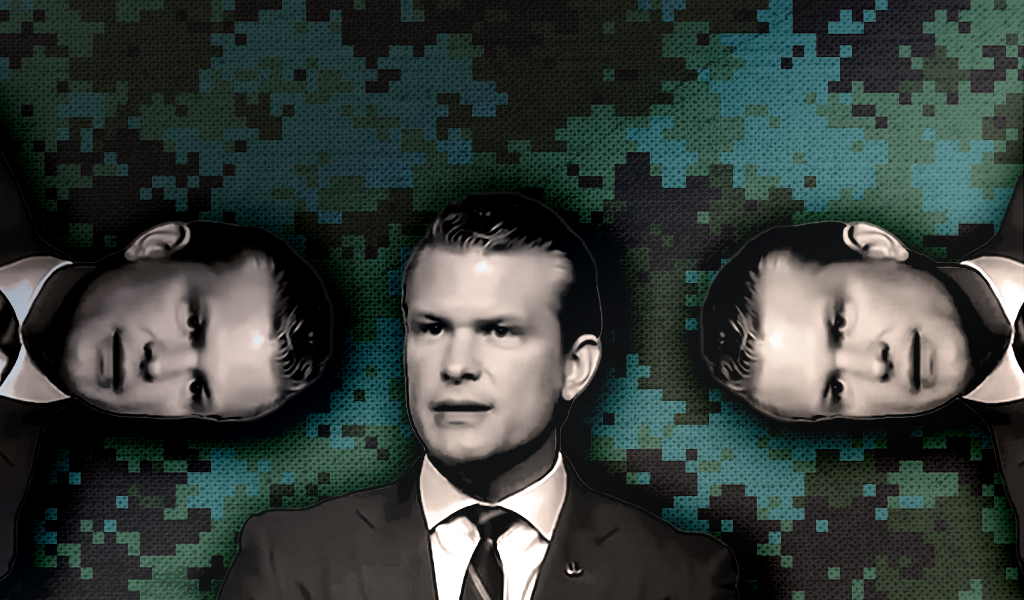
Hegseth lacked anything resembling traditional qualifications for his post when President Donald Trump appointed him, having instead spent years working for Fox News. And while his most extensive work experience is at a media company, he was by no means a reporter. A right-wing host of the network’s weekend morning show, Hegseth shared the contempt for journalists that permeates much of the network’s programming, urging readers of his 2020 book to “disdain, despise, detest, [and] distrust” the news media.
As defense secretary, Hegseth has effectively made that comment the mission statement for the department’s press relations. He has mocked and derided reporters and torn apart his senior staff in search of media leakers. Soon after he took office, the department punished national news outlets by kicking them out of their Pentagon work spaces and handing them off to right-wing publications. A few months later, new rules banned reporters from much of the Pentagon unless they were escorted by an approved member of the department.
Hegseth and his department are historically lax in sharing information with the press and thus the public, as NPR reporter Tom Bowman, a 28-year veteran of the Pentagon press corps, noted:
Now, we’re barely getting any information at all from the Pentagon. In the 10 months that the Trump administration has been in office, Defense Secretary Pete Hegseth has given just two briefings.
And there have been virtually no background briefings, which were common in the past whenever there has been military action anywhere in the world, as there has been with the recent bombings of Iran’s nuclear facilities and of boats off the coast of Venezuela alleged to be carrying illicit drugs. In previous administrations, Defense Department officials — including the acerbic [Don] Rumsfeld — would hold regular press briefings, often twice a week. They knew the American people deserved to know what was going on.
But limiting access for reporters and starving them of information was apparently not enough.
Last month the Pentagon rolled out strict new guidelines for the press corps which warned that “information must be approved for public release by an appropriate authorizing official before it is released, even if it is unclassified,” and threatened to strip access from anyone who violated that stricture. On the October 15 deadline to sign their acknowledgement of the new guidelines, journalists for dozens of outlets including The New York Times, The Washington Post, and The Wall Street Journal instead turned in their press passes and left the building en masse.
“Signing that document would make us stenographers parroting press releases, not watchdogs holding government officials accountable,” Bowman noted.
But for Hegseth, that was the point — he wanted stenographers rather than watchdogs, and following the establishment of the new guidelines and the ensuing walkout, that’s exactly what he’s gotten. All the reporters who might consider themselves watchdogs have left the building. Even right-wing outlets Fox, Newsmax, The Daily Caller, The Washington Times, and the Washington Examiner drew a line and refused to sign the new guidelines to retain their access.
Those that did sign are, almost by definition, the type of willing administration lapdogs Hegseth wanted covering him from inside the building. They are, at times by their own admission, woefully incapable of doing investigative work that holds him to account — but they have the skills to promote his talking points and puff him up to their right-wing audiences.