



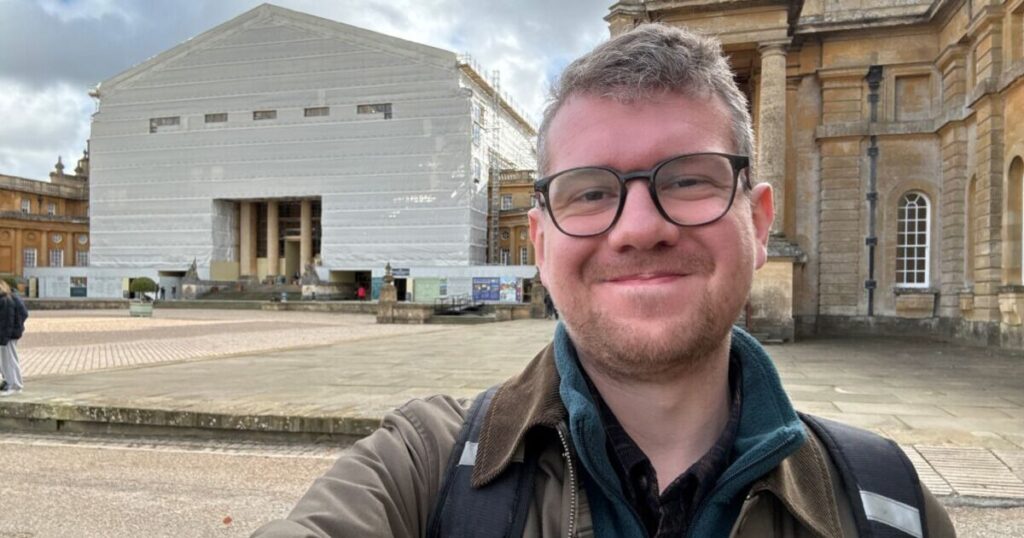
Blenheim Palace calls itself Britain’s greatest palace, and, sure enough, it is truly resplendent, albeit currently covered in scaffolding due to crucial conservation works. I visited the crown jewel of Oxfordshire to have a look at these, taking advantage of temporary access to the roof, where visitors can observe experts going about their business. It was deeply fascinating – truly one of the coolest things I’ve ever seen. The £12million project sees the redesign of gutters to combat rainwater build up, including a 40% “buffer” to protect against increased precipitation due to climate change.
Their lead coverings are also being replaced, and downpipes, hoppers, and channels are repaired. Historically and architecturally significant stonework, including statues of the Roman goddess of water and wisdom, Minerva, is being cleaned and preserved. Sections of sand-cast lead on English oak planks have been painstakingly numbered and examined one by one as specialists determine which are damaged and no longer of use.
Visitors can, at the moment, see inside the structural support, usually hidden from view.
Speaking of things not usually on display, some private rooms used by the 12th Duke of Marlborough are open to tourists while renovations take place, but photography is not allowed.
Walking through these, I felt like some sort of pryer.
Tourists flock to see John Vanburgh’s landmark Baroque design, the architect famously didn’t get along with Sarah Churchill, the Duke of Marlborough’s wife, as well as the room where Britain’s famous wartime leader, Winston Churchill, was born.
A student of history, I stopped for a short time to take in the significant location.
As I exited, a few people, American tourists by the sound of them, stood in front of the bed and posed for a picture.
The cigar-smoking and champagne-guzzling leader remains as iconic as ever and has many admirers worldwide.
There is, of course, a Churchill exhibition at Blenheim, chronicling his life and career.
This includes some locks of his hair enclosed in a glass case, cut from his head when he was five-years-old.
One of my housemates later that day joked that they must be preparing to clone him.
Alongside this was a sailor suit worn by an infant Churchill in a well-known photo you may have seen.
These resembled saintly relics, and crept me out a bit.
Gasping visitors were impressed.
This sort of renovation of individuals has its place, and where they were born is perhaps where it should happen.
But I couldn’t help but reflect that too much fixation on a historic personality is not healthy.
It is important to remember people like Churchill during our national life, but he is long dead.
But, as regards its victory in the Second World War, the UK can sometimes resemble that friend who brings out the same tired anecdotes every time you meet.
We must move on and find someone else who is capable of saving the country from its present shambles.
Maybe their birthplace, although most likely not a palace, will be held in a similarly high regard in centuries to come.